One robot, five Sodick EDM machines inside HANZA’s 15-metre cell
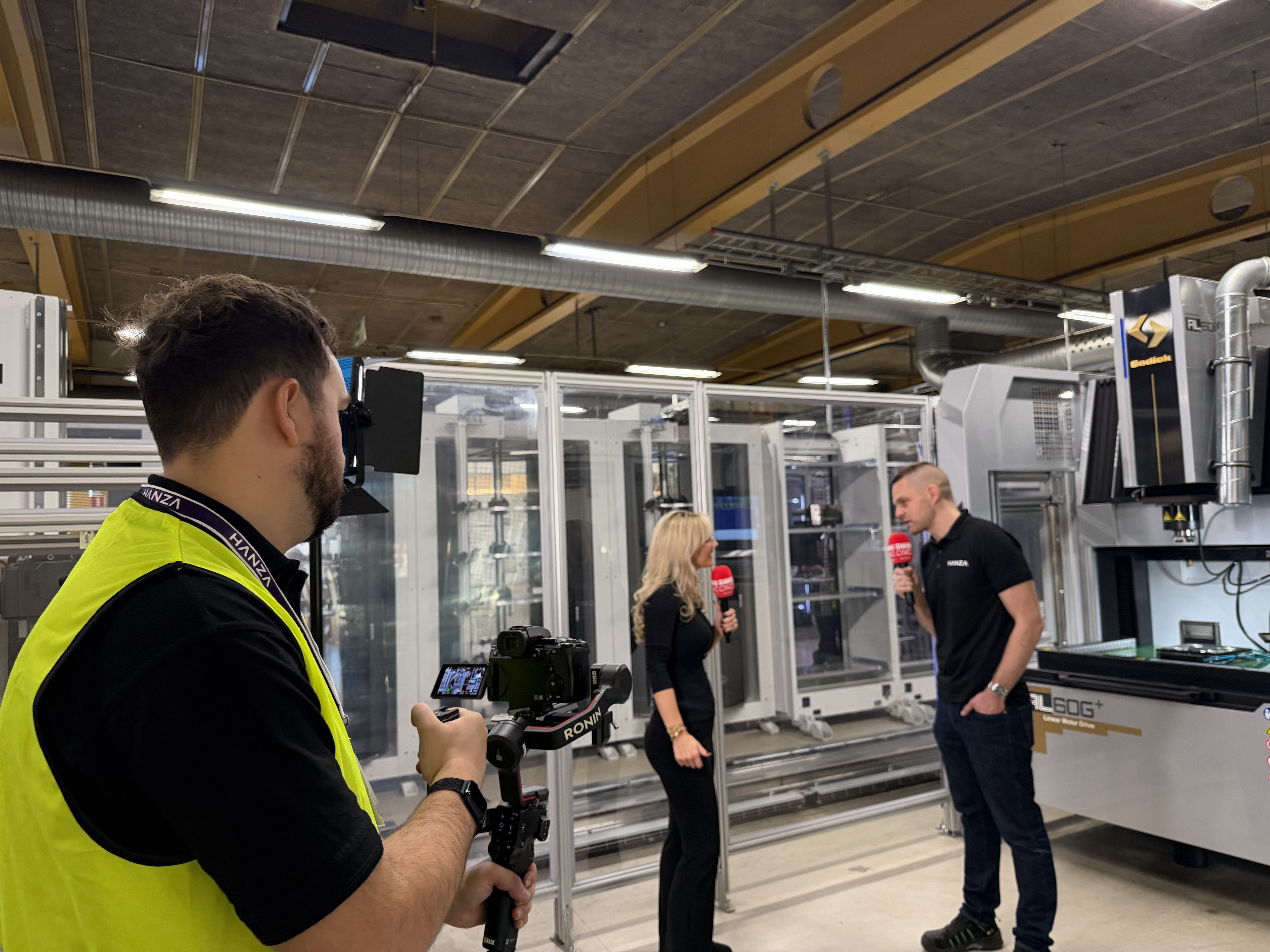
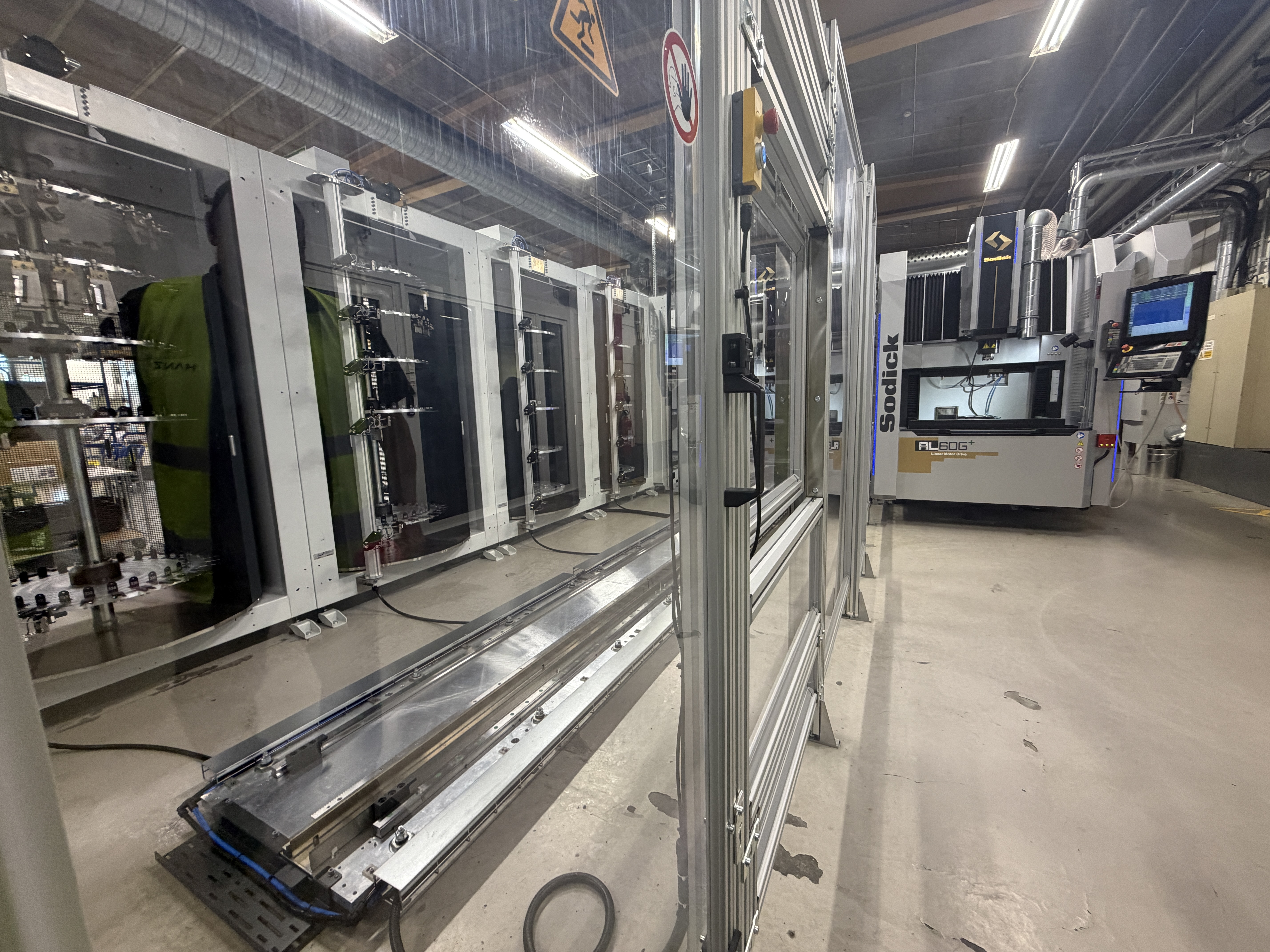
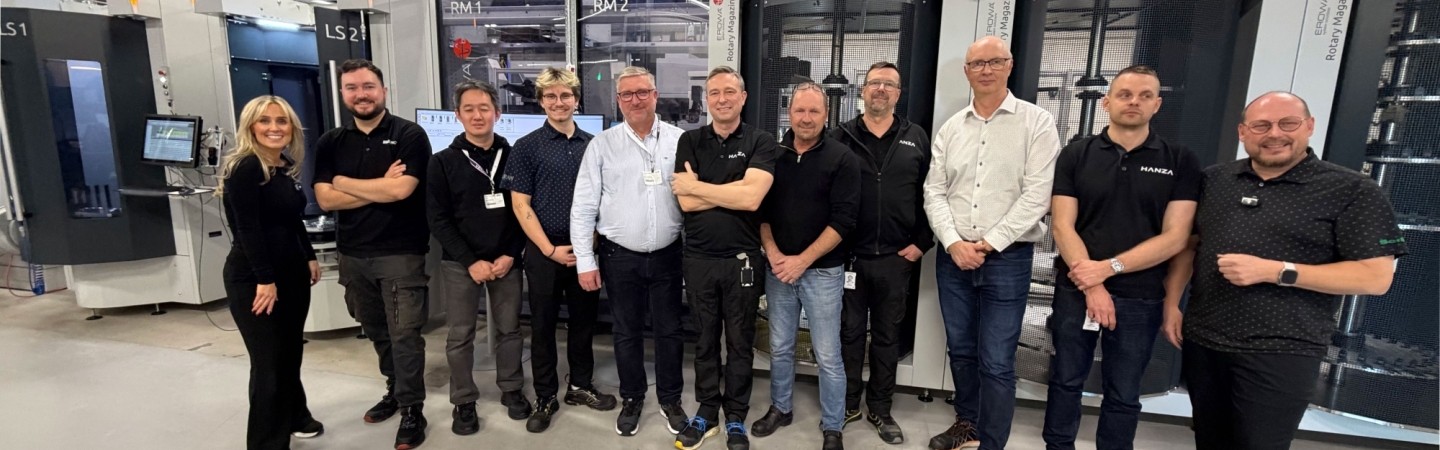
By the time we crossed from Norway into Sweden on our way to Årjäng, daylight had already gone and the temperature was below freezing. The following morning, inside HANZA Mechanics, we watched a single rail-mounted robot work its way along a 15-metre production cell, tending five Sodick die-sinking EDM machines.
HANZA manufactures complex gas turbine components from high-value castings. Each casting is already costly by the time it reaches the EDM machine, so a machining error can mean losing a part with considerable work already invested in it. With demand growing and its existing die-sinking equipment more than 20 years old, HANZA needed a system that could run around the clock and reduce the risk of handling and setup errors.
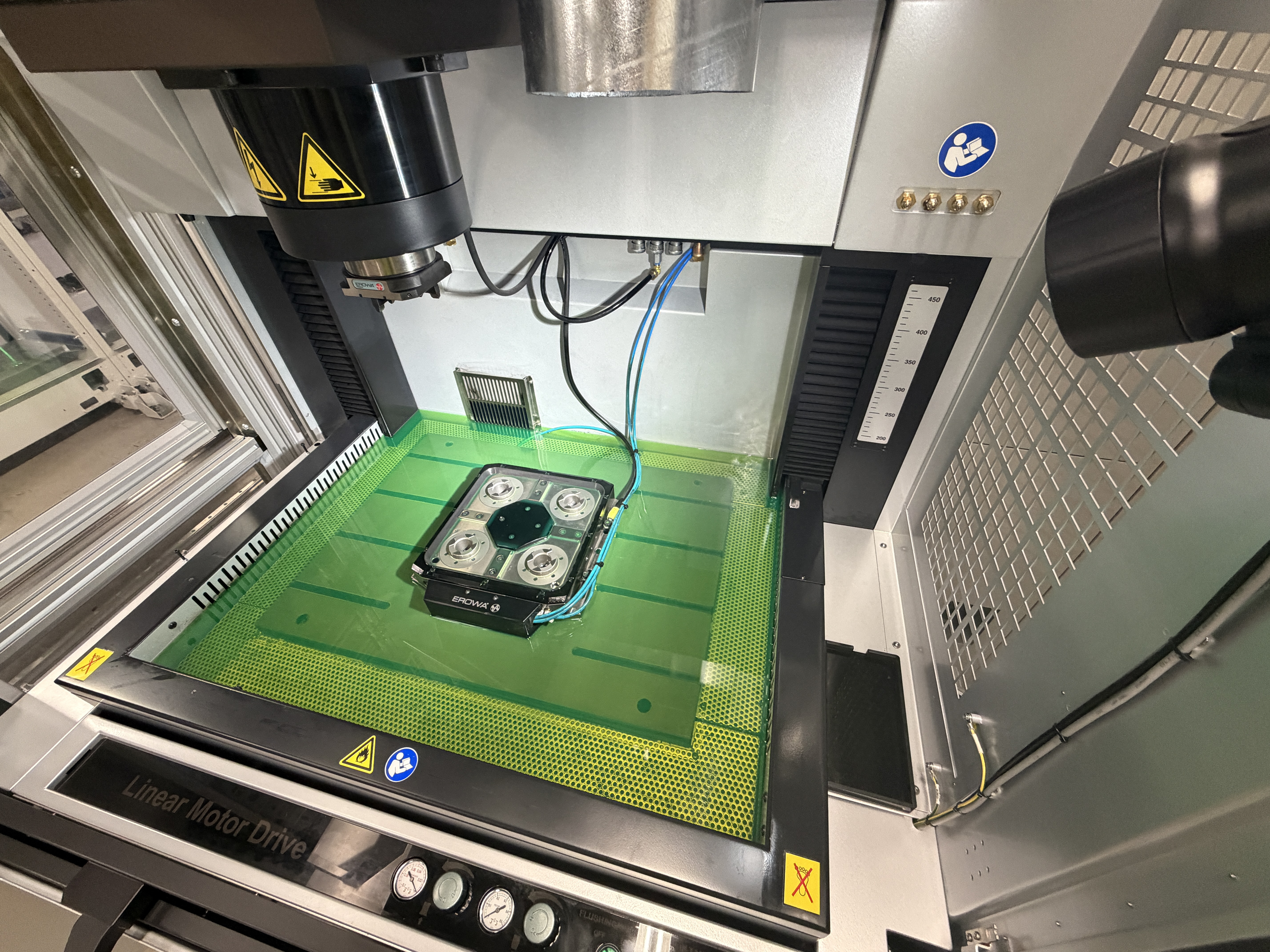
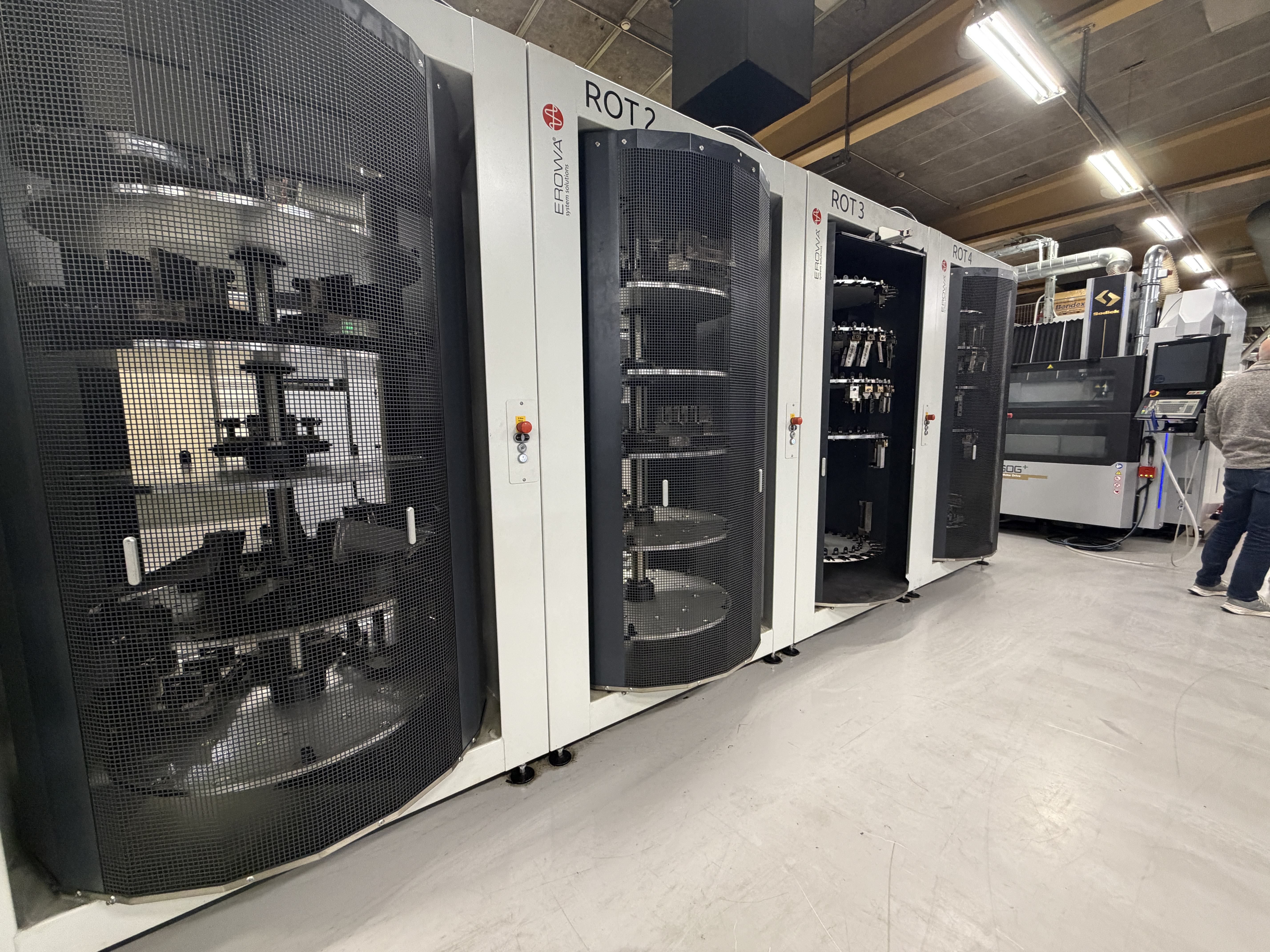
The project brought together HANZA Mechanics, Auran Industries, Sodick and EROWA. HANZA already used Sodick wire EDM machines. For the new die-sinking cell, the team installed three Sodick AG60L machines and two Sodick AL60G machines. EROWA’s zero-point clamping and identification systems support the automated handling, while the software coordinates jobs and tracks pallets and electrodes across the cell.
The robot travels between machines, loading workpieces, changing electrodes and transferring finished components to a coordinate measuring machine for inspection. One detail shows how the cell fits into everyday production. If an operator moves a pallet or electrode in a magazine, the software rescans the IDs when the door closes and updates its record of where everything is. Operators can prepare jobs offline while the machines continue running.
For HANZA manufacturing engineer Björn Andersson and his colleagues, the change is also about how they spend their time. With the robot handling routine transfers, the team can focus on preparing the next jobs, checking measurements and keeping the process under control.
HANZA is already building a second cell. Two AL60G machines are in place, and the plan is to expand it to five, all Sodick AL60Gs. A separate cell keeps the original robot’s travel distance the same and avoids making both groups of machines dependent on a single robot.
On the drive back, we passed deer standing in frosted fields under a clear night sky. It was a memorable end to the visit, but the scene that stayed with us from the factory was the robot moving from one machine to the next, carrying a casting through a process that now runs around the clock.